SAVE 15000 Project — A TRANSPLEX Initiative
They can be pets. Not pelts.
A practical transition model to reduce the unnecessary killing of chinchillas during Romania’s fur-farm phase-out
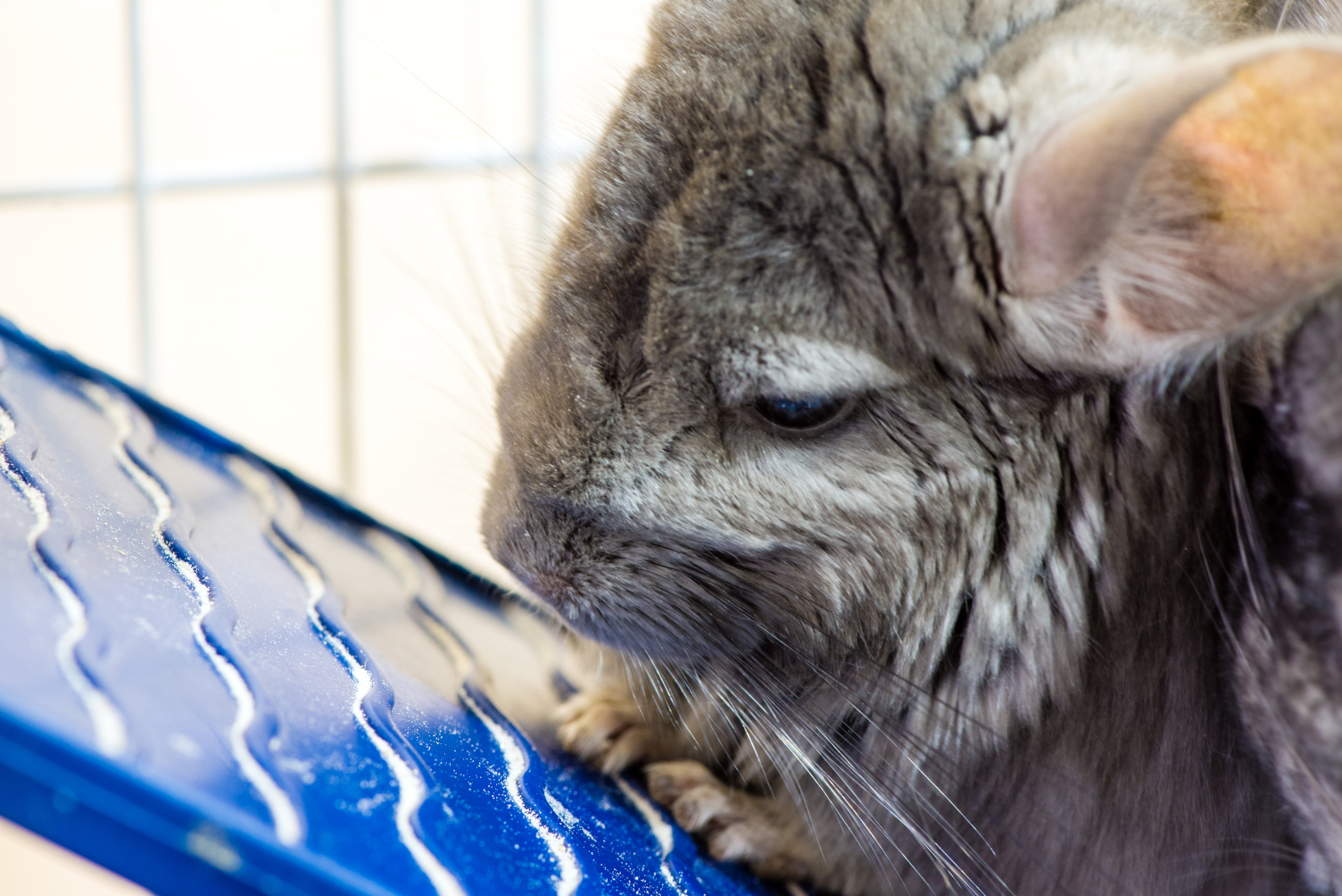
15,000 chinchillas are estimated to be at risk before 2027.
Current confirmed figure in Romania: approximately 4,613 chinchillas remaining in farms during the transition phase.
Core Proposition
Instead of continued killing for fur during the transition period, this project proposes a structured transfer route into responsible pet adoption.
The objective is simple: create a practical pathway in which preserving life becomes economically and operationally more realistic than liquidation.
Core Finding — An Ethical Phase-Out Without an Ethical Transition
Article 13 of the Treaty on the Functioning of the European Union requires the European Union and its Member States, when formulating and implementing relevant policies, to pay full regard to animal-welfare requirements because animals are sentient beings.
The European Citizens’ Initiative
Fur Free Europe
received 1,502,319 verified statements of support. It called for an end to keeping and killing animals for the sole or main purpose of fur production.
Romania subsequently prohibited the commercial breeding, intentional capture and killing of chinchillas and mink from 1 January 2027 through Law No. 286/2024, enacted within its Animal Protection Law.
Romania legislated an ethical phase-out, but failed to legislate the ethical transition.
The law establishes the date on which commercial killing becomes prohibited. It does not establish how the animals still alive during the transition must be treated. It contains no dedicated framework for pre-killing notification, a waiting period, transfer opportunities, responsible rehoming or a slaughter-last safeguard.
DG SANTE Unit G3 stated that responsibility lies with the Romanian authorities, confirmed that no EU-level mechanism exists to prevent the animals from being killed, referred to Regulation (EC) No 1099/2009, and subsequently declined further correspondence.
ANSVSA initially confirmed that breeding and exploitation, including the killing
of chinchillas, remain permitted until 31 December 2026, and stated that the
means of concluding the transition remain the option of keepers or owners.
In a subsequent formal follow-up response issued on 5 August 2026, ANSVSA
confirmed that it had instructed all regional structures to collect data from
chinchilla and mink holders through a questionnaire that includes questions
concerning the possibility and willingness of holders to entrust animals for
adoption to Romanian or international non-governmental organisations.
This is a concrete administrative development: adoption and NGO entrustment
have moved from an external proposal into an official nationwide data-collection
process. However, no mandatory adoption programme, waiting period, transfer
obligation or slaughter-last safeguard has yet been established.
Commercial killing remains legally permitted, but it is not legally required.
Regulation (EC) No 1099/2009 governs how animals must be treated when killing has already been lawfully chosen. It does not require killing, provide a transition policy, or explain how continued commercial killing is consistent with a phase-out adopted in the name of animal protection.
The central issue is not that the SAVE15000 proposal has not been adopted. The issue is that the ethical purpose of the prohibition was not implemented for the animals still alive during the transition. SAVE15000 demonstrates that a decentralised non-lethal route, without a State-operated mass shelter or permanent public animal-care staff, is at least capable of practical consideration.
The European Commission transferred responsibility to Romania. Romania left continued killing available to owners. Neither authority has explained how this outcome is consistent with recognising animals as sentient beings and ending their killing for fur.
For NGOs and Authorities
This is an operational model, not a shelter-based rescue request.
The proposed role of participating organizations is limited to coordination, verification, and on-site support.
No long-term custody and no large-scale temporary shelter infrastructure are assumed.
📊 Public Contact and Response Record
Last updated: 19 September 2026
This section records the public authorities, political representatives,
animal-welfare organisations, companies, public figures and media formally
contacted or notified by the SAVE15000 Project, together with the response
status known at the date above.
Inclusion means that a documented communication was submitted or received.
It does not imply endorsement, cooperation, intervention or responsibility
for the SAVE15000 Project.
Latest Development — Nationwide Data Collection and Adoption Questions Confirmed
In a formal follow-up response issued on 5 August 2026, ANSVSA confirmed
that it had instructed all regional structures to collect information from
chinchilla and mink holders through a national questionnaire.
The questionnaire expressly includes questions concerning holders’
possibility and willingness to entrust animals for adoption to Romanian
or international non-governmental organisations.
ANSVSA stated that all data will be collected by the end of August,
providing an accurate overview of the remaining animals and the action
plans adopted by farmers and breeders.
ANSVSA also confirmed that transfer through donation is permitted under
Romanian civil law and that transfer to organisations in other EU Member
States or third countries is legally possible subject to the applicable
veterinary, trade and destination-country requirements.
This is the first concrete nationwide administrative measure capable of
identifying animals whose holders may be willing to pursue adoption
instead of killing.
Parliamentary Update — Romanian Senate Committee Response
The Committee for Agriculture, Food Industry and Rural Development of the
Senate of Romania formally replied to the SAVE15000 petition, registered
under no. XXIII/846/21.07.2026.
The Committee stated that it had reviewed the issues presented and noted
that, as also indicated by the European Commission, there are no transitional
measures leading up to 1 January 2027.
This confirms the central legislative gap raised by SAVE15000: Romania
prohibited the commercial breeding, capture and killing of chinchillas and
mink from 1 January 2027, but did not establish a dedicated transition
safeguard for the animals still alive before that date.
The Committee also referred to legislative project L570/2025 / PL-x 120/2026.
SAVE15000 submitted a clarification stating that it does not support any
repeal, postponement or weakening of the prohibition introduced by Law
No. 286/2024. SAVE15000 asks for the opposite: preserving the prohibition
while creating limited transition safeguards for animals still alive before
it takes effect.
-
European Commission — Europe Direct:
replied under reference
no. #7755651
and confirmed that no EU-level mechanism exists to prevent the killing
of fur animals during Romania’s transition period. -
European Commission — DG SANTE, Unit G3, Animal Welfare:
formally replied
that responsibility for the transition lies with the Romanian national
authorities. -
European Commission — formal complaint reply
Ares(2026)5011901
stated that the Commission had identified no legal basis for intervention
as long as Member States comply with existing EU rules. The reply referred
to Council Regulation (EC) No 1099/2009 on the protection of animals at the
time of killing. DG SANTE subsequently declined further correspondence on
the matter. -
Ursula von der Leyen, President of the European Commission:
formally contacted through the President’s official contact channel and
asked to review the contradiction between Article 13 TFEU, the recognition
of animals as sentient beings, and the acceptance of continued commercial
killing during an ethically motivated phase-out.
No substantive response has been received. -
ANSVSA / NSVFSA, Romania:
initially confirmed under Ref. no. 6441/08.05.2026 that commercial breeding
and exploitation, including the killing of chinchillas, remain permitted
until 31 December 2026 and that the method used to conclude the transition
remains the decision of keepers or owners.In its formal follow-up response issued on 5 August 2026, concerning the
SAVE15000 follow-up registered under No. 6441/17.07.2026, ANSVSA confirmed
that it had issued instructions to all regional structures and introduced
a questionnaire for fur-animal holders.The questionnaire includes questions concerning the possibility and
willingness of holders to entrust chinchillas and mink for adoption to
Romanian or international non-governmental organisations.ANSVSA stated that all data will be collected by the end of August,
producing an accurate overview of the number of remaining chinchillas
and mink and the action plans chosen by farmers and breeders.ANSVSA also clarified that entrusting animals for adoption through donation
is permitted under Romanian civil law. Transfers to organisations in other
EU Member States may proceed under applicable EU animal-health and
intra-Community trade rules, while transfers to third countries, including
Japan, are possible subject to the legal and animal-health requirements of
the destination country.This nationwide data collection and the inclusion of adoption willingness
represent a concrete operational step toward identifying animals that may
be transferred rather than killed.ANSVSA nevertheless reiterated that killing remains legally permitted until
31 December 2026 and that the final choice remains with the owners.
No mandatory waiting period, transfer obligation or slaughter-last safeguard
has yet been established. -
Embassy of Romania in Japan:
acknowledged receipt and stated that the SAVE15000 petition had been
officially forwarded, in accordance with OG 27/2002, to ANSVSA and the
Ministry of Environment, Waters and Forests. -
Embassy of Romania in Japan — subsequent clarification request:
asked to explain the discrepancy between its confirmation that the petition
had been forwarded to the Ministry of Environment and the Ministry’s later
statement that it had never received or registered the petition.
No response to the clarification request has been received. -
Ministry of Environment, Waters and Forests of Romania / MMEDIU:
initially replied that it had neither received nor registered the
SAVE15000 petition and considered the matter outside its field of competence.After the Prime Minister’s Office forwarded the SAVE15000 request through
the Government’s official administrative route, the matter was registered
by the Ministry under reference R 36176/03.08.2026 and a substantive
ministerial response was issued.The response clarified institutional competences, indicating that
animal-health, veterinary and animal-welfare implementation questions fall
primarily within the competence of ANSVSA and other competent veterinary
authorities, while legislative safeguards require action by bodies with
legislative authority.The ministerial response did not establish a transition safeguard
or adoption programme, but it confirmed the institutional routing and
competence framework relevant to the SAVE15000 request. -
Nicușor Dan, President of Romania:
formally contacted through the Presidency’s official contact form and asked
to initiate urgent national coordination among the Government, ANSVSA,
Parliament and other relevant authorities.
The Presidency was informed that its substantive response, or the absence
of a response, would be recorded publicly.
Response pending. -
Prime Minister and Government of Romania:
formally contacted through the Government’s official contact form.
The request called for the designation of a responsible national coordinator,
a verified inventory, pre-killing notification, a temporary waiting period,
regulated transfer procedures and a slaughter-last safeguard.
The Prime Minister’s Office subsequently forwarded the request to the
Ministry of Environment, Waters and Forests for examination and handling.
A substantive governmental or ministerial response to the requested
transition safeguards remains pending. -
Romanian Government / Prime Minister’s Control Body:
requested to conduct an administrative review and provide guidance concerning
the handling of the SAVE15000 petition and the absence of a substantive
transition safeguard. -
Romanian Government petition route / DRP:
forwarded the SAVE15000 administrative review request to ANSVSA and the
Ministry of Environment petition contact channel, with SAVE15000 copied.
The Ministry subsequently stated that it had not received or registered
the petition. The later forwarding by the Prime Minister’s Office placed
the matter before the Ministry through a separate official route. -
Romanian Parliament — Senate and Chamber of Deputies:
formally petitioned to examine the legislative gap in Law No. 286/2024 and
consider urgent corrective safeguards, including a verified inventory,
pre-killing notification, a waiting period, regulated voluntary transfer
and a slaughter-last mechanism.The Committee for Agriculture, Food Industry and Rural Development of the
Senate of Romania replied to the petition registered under no.
XXIII/846/21.07.2026. The Committee stated that it had reviewed the issues
presented and noted that there are no transitional measures leading up to
1 January 2027.The Committee referred to legislative project L570/2025 / PL-x 120/2026,
currently before the Chamber of Deputies. SAVE15000 submitted a clarification
stating that it does not support any repeal, postponement or weakening of
the prohibition introduced by Law No. 286/2024.SAVE15000’s position is that the prohibition on commercial fur farming
should be preserved, while a separate transition safeguard should be created
for animals still alive before the prohibition takes effect.A further response to this clarification remains pending.
-
Nicolae Ștefănuță, Vice-President of the European Parliament:
formally contacted and asked to consider submitting a priority parliamentary
question concerning Romania’s failure to establish an ethical transition
framework.
Response pending. -
Anja Hazekamp, Member of the European Parliament:
formally contacted regarding a possible parliamentary question addressing
the absence of transition safeguards for Romania’s remaining chinchillas.
Response pending. -
Tilly Metz, Member of the European Parliament:
formally contacted regarding the inconsistency between Fur Free Europe,
Article 13 TFEU and the continued commercial killing of animals during the
Romanian transition.
Response pending. -
Manuela Ripa, Member of the European Parliament:
formally contacted and asked to consider parliamentary intervention regarding
the documented transition-design failure.
Response pending. -
Niels Fuglsang, Member of the European Parliament and Chair of the
Intergroup on the Welfare and Conservation of Animals:
formally contacted regarding possible parliamentary and intergroup action.
Response pending. -
Humane World for Animals / HSI Romania:
responded that its logistical resources for directly implementing an adoption
or purchase programme in Romania were limited. It stated that discussion might
be possible if a coherent and realistic plan involving a local implementing
organisation were available.A formal follow-up was submitted after the DG SANTE and ANSVSA replies were
received.No commitment to coordinate or implement a non-lethal transition has been
received. -
Eurogroup for Animals / Fur Free Europe:
formally contacted and asked whether the continued commercial killing of at
least 4,613 chinchillas can be accepted as the normal conclusion of a
phase-out promoted in the name of animal protection.
No substantive response has been received. -
PETA:
contacted regarding the documented and time-limited risk to Romania’s
remaining chinchillas. A senior public-facing representative was also
contacted.
No substantive response or intervention addressing SAVE15000 has been
received. -
Billie Eilish management and related public contact routes:
formally contacted because of Billie Eilish’s public opposition to fur and
animal-welfare advocacy. A time-sensitive request was submitted through her
current management company’s official contact route, asking for one public
share or statement supporting an urgent non-lethal transition.
No substantive response has been received. -
Prada Group:
formally notified regarding the unresolved transition gap and the potential
continued killing of Romania’s remaining chinchillas.
Prada was the only contacted major fashion or luxury group to provide a
response. Prada Client Service confirmed that the request had been forwarded
to the appropriate internal department for further review. A substantive
response from that department is currently pending. -
Other major fashion and luxury brands with publicly stated anti-fur or
fur-free positions:
several well-known brands were formally notified regarding the unresolved
transition gap and whether opposition to fur should also include protection
for animals remaining alive during the industry’s phase-out.
No substantive response has been received. -
Romanian and international media:
HotNews.ro, Digi24, Libertatea, G4Media, PRO TV, Reuters,
Associated Press, Euronews, POLITICO Europe, Euractiv,
EUobserver and The Brussels Times were contacted and supplied
with information concerning the confirmed animal numbers,
Romania’s legislative transition gap, the formal European
Commission replies and the ANSVSA responses.
No significant media coverage or substantive editorial response
has resulted to date. -
White House:
formally notified for international attention.
No operational intervention has been identified. -
Public legal and policy analysis:
published on Medium under the title
“An Ethical Phase-Out Without an Ethical Transition”
and subsequently shared through LinkedIn, X and Threads.
Current Institutional Outcome
The SAVE15000 initiative has now produced a concrete nationwide
administrative development.
ANSVSA has instructed all regional structures to collect data from
chinchilla and mink holders, including information on the possibility
and willingness to entrust animals for adoption to Romanian or
international non-governmental organisations.
By the end of August, Romania is expected to have an accurate overview
of the remaining animal numbers and the intended plans of the relevant
farmers and breeders.
ANSVSA has also formally confirmed that adoption through donation is
legally permitted and that domestic, intra-EU and third-country transfer
routes may be used subject to the applicable legal and veterinary
requirements.
Separately, the Romanian Senate’s Committee for Agriculture, Food Industry
and Rural Development has registered and reviewed the SAVE15000 petition
and stated that there are no transitional measures leading up to
1 January 2027. SAVE15000 has clarified that it does not seek to weaken
the fur-farming prohibition, but to preserve it while adding transition
safeguards for animals still alive before it takes effect.
This creates a practical basis for identifying willing holders and
connecting them with responsible organisations or recipients.
However, killing remains legally permitted until 31 December 2026,
the final decision remains with the owners, and no mandatory waiting
period, transfer obligation or slaughter-last safeguard has yet been
established.
The immediate priority is therefore to ensure that the data collected
by the end of August are translated into actual transfer coordination
before animals whose holders are willing to pursue adoption are killed.
SAVE15000 will continue to publish an accurate record of substantive
replies, official actions, refusals, forwarding decisions,
administrative inconsistencies and prolonged absences of response.
Transparency note:
Response status is reported factually according to the project’s
communication records. “No substantive response” means that no reply
addressing the requested action or policy issue had been received by
the stated update date.
⚠️ Latest European Commission Reply: No Immediate EU-Level Safeguard Identified
In a further formal reply from DG SANTE, Unit G3 – Animal Welfare, the European Commission stated that the EU currently has no mechanism to prevent the killing of fur animals during Romania’s transition period.
“The EU has no mechanism to prevent the killing of fur animals during the transition period.”
The Commission also stated that Member States establish their own conditions for implementing national bans on fur farming, and that the Commission has no legal basis to intervene as long as Member States comply with existing EU rules.
“There is therefore no violation of EU law, since no EU legislation exists on this matter.”
At the same time, the reply stated that any killing of animals must be performed in accordance with Council Regulation (EC) No 1099/2009 on the protection of animals at the time of killing.
Core Policy Contradiction
Council Regulation (EC) No 1099/2009 regulates how animals may be killed. It does not provide an ethical or policy justification for killing the remaining chinchillas of a fur industry that Romania has already decided to end on ethical grounds.
Romania has already moved toward ending fur farming on ethical grounds. If fur farming is being phased out because it is ethically unacceptable, the remaining chinchillas should not be treated merely as disposable production assets during the transition period.
The central issue is therefore not only whether killing can be performed under existing procedural rules, but whether avoidable killing should remain the default outcome when a practical non-lethal transition route may still be possible.
This is the implementation gap addressed by the SAVE 15000 Project: EU-level principles recognize animals as sentient beings, but no immediate EU-level operational safeguard has been identified to protect chinchillas currently at risk during Romania’s national transition away from fur farming.
The SAVE 15000 Project therefore calls for a practical national and local transition pathway: structured transfer from farms into responsible pet adoption, where feasible, instead of avoidable liquidation during the transition period.
Why This Matters
Structural Problem
Romania has already moved toward ending fur farming on ethical grounds.
Yet during the transition period, thousands of chinchillas may still be killed.
This creates a clear contradiction: if the practice is being phased out as unacceptable, continued killing during the interim remains an avoidable outcome.
Practical Alternative
Chinchillas already have established value as companion animals.
A structured rehoming route can preserve animal life while still offering farm operators a viable exit pathway.
The proposal is therefore not only ethical, but operationally realistic.
Operational Snapshot
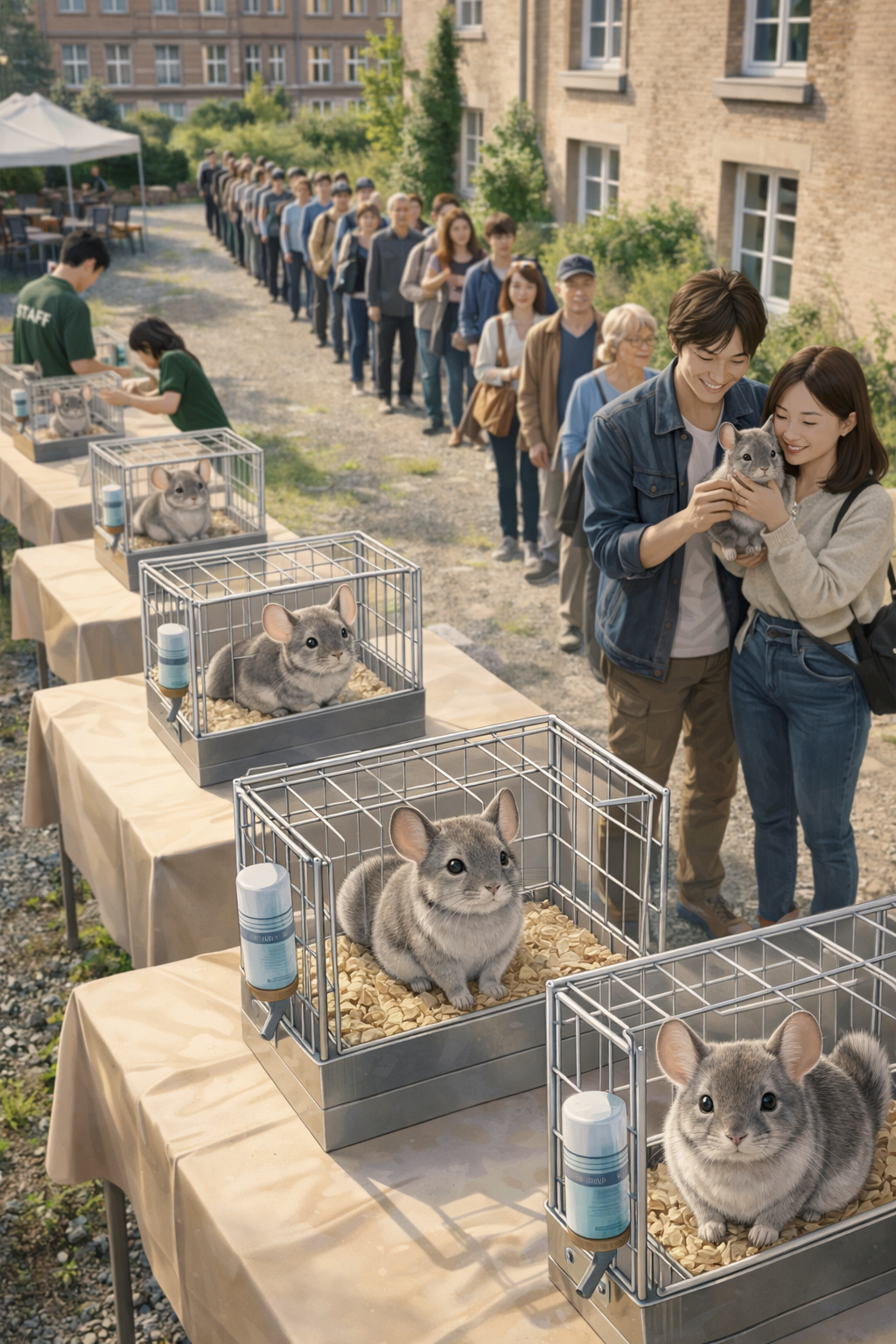
- Flow: Adopter applies → visits participating farm → completes transfer on-site
- Economics: €220 from adopter → €200 to farmer → €20 for coordination and transfer management
- NGO role: Coordination, screening support, welfare guidance, event assistance
- Structure: No shelter requirement / no long-term inventory holding
- Authority role: Oversight, compliance, and alignment with applicable transition rules
This structure is designed to minimize friction.
The animal moves directly from farm to home, avoiding the cost, delay, and logistical burden of temporary mass sheltering.
How the Model Works
- Participating farms designate animals eligible for transfer
- Potential adopters register interest and receive basic care guidance in advance
- On-site transfer events are organized near or at the farms
- Adopters meet the animal directly and complete the transfer immediately
- Coordination support is provided without requiring permanent shelter intake
- Resale must be prohibited within the transfer framework
In practical terms, this is a direct transfer model.
It is intended to reduce killing during the transition phase by replacing liquidation with structured rehoming wherever feasible.
Animal Welfare Requirements
Any transfer model must clearly define minimum welfare conditions for responsible chinchilla care.
- Proper temperature control
- Proper humidity control
- Regular dust bath access
- A suitable cage environment
- Basic husbandry understanding before transfer
- Strict prohibition of resale
Why This Is Feasible
This model is designed to work with existing actors and minimal additional infrastructure.
It does not depend on building a large centralized shelter system.
It does not assume long-term animal custody by NGOs.
It is a coordination-based framework intended for immediate practical discussion.
- Reduces infrastructure burden
- Creates a non-lethal transition option
- Aligns with broader animal welfare objectives during phase-out
- Can serve as a replicable framework for similar transition cases
What We Are Asking For
- Recognition that continued killing during the transition period is avoidable
- Evaluation of a structured rescue-transfer model as a practical alternative
- Coordination among authorities, welfare organizations, and local implementing actors
- Public and institutional visibility for a non-lethal transition pathway
If a better outcome already exists, continuing the worse one is no longer neutral.
Contact
For coordination, institutional contact, or implementation discussions:
Public Supporters
Financial support is not required for SAVE15000 public supporter listing.
Individuals, organizations, and companies may be listed here by endorsing the purpose of SAVE15000.
To be listed as a public supporter, please contact SAVE15000 using the contact address above. Companies and organizations that wish to be listed with a logo are welcome to provide a suitable logo image and official website URL.
Organizations & Corporate Supporters
Individual Supporters
- Akihisa Yorozu, JP
Initiated by TRANSPLEX
A science-based project integrating music, research, and global initiatives.
This is not a general awareness slogan alone. It is a practical transition framework for immediate consideration.